Types of Roof Tiles: A Complete Guide for Derby & Derbyshire Homeowners
Types of Roof Tiles in the UK
Whether you're planning a full re-roof, replacing a few damaged tiles, or simply doing your research before calling a roofer, choosing the right roof tile is one of the most important decisions you'll make for your home. At Derby Roofers, we've helped hundreds of homeowners across Derby and Derbyshire find the right roofing solution — and this guide is designed to make that choice a whole lot easier.
Why Your Choice of Roof Tile Matters
Your roof is your home's first line of defence against the unpredictable British weather — and in Derbyshire, that means everything from heavy autumn rain to hard winter frosts and occasional snow. The right roof tile won't just keep you dry; it will:
- Protect your home's structural integrity for decades to come
- Boost your property's kerb appeal and resale value
- Improve thermal performance and help reduce energy bills
- Comply with local planning rules, especially in conservation areas
Choosing the wrong tile — or having it fitted incorrectly — can lead to costly repairs down the line. That's why expert local advice matters.
There are countless types and styles of roof tiles available to consider for your roofing project, and which one you choose will depend on a range of factors. You can use this article to help you decide what type would be the best option for your home.
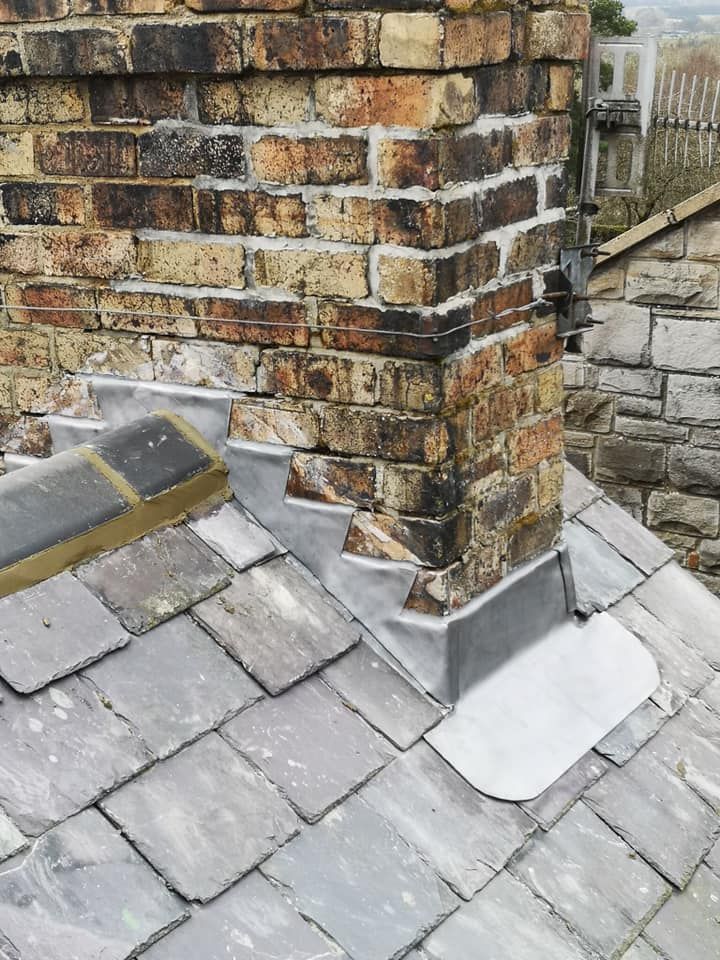
The Main Types of Roof Tiles Available in the UK
Concrete Roof Tiles
Concrete roof tiles are the most widely used roofing material in the UK, accounting for around 60% of the market. Made from a blend of sand, cement, and water, they are moulded into a variety of profiles — flat, interlocking, and double Roman styles — giving homeowners plenty of choice.
Key advantages of concrete roof tiles:
- Cost-effective — significantly cheaper than clay or slate
- Durable — typical lifespan of 50–60 years
- Versatile — available in a wide range of colours and textures
- Fire resistant — an important safety consideration
- Low maintenance — requiring only periodic inspections
One thing to note: concrete tiles are heavier than some alternatives, so your roof structure needs to be able to carry the load. They can also fade slightly in colour over time. For new builds, extensions, and budget-conscious re-roofing projects across Derby, they remain an outstanding choice.
Clay Roof Tiles
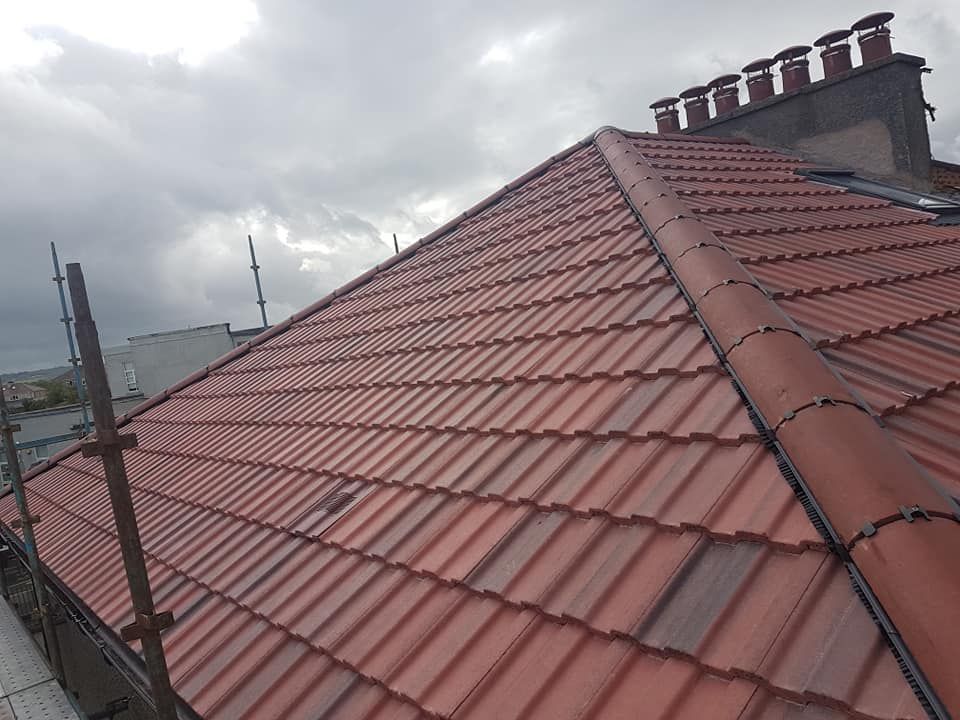
Clay tiles have been used on British roofs for centuries and still account for around 75% of the UK's domestic tile market. Their warm, earthy tones — from rich terracotta reds to softer buffs — give properties a timeless, traditional character that never goes out of style.
Clay tiles in the UK come in four main types:
- Plain tiles — the most common, smooth-faced and ideal for high-rainfall areas
- Dimpled / eggshell tiles — embossed surface allows better water absorption and reduces slippage risk
- Ridged / pan-and-cover tiles — offer excellent acoustic insulation and suit both batten and solid deck installation
- Spanish-style (flat) tiles — a sleeker profile popular on period and character properties
Typical lifespan: 60–100+ years. Clay tiles are also recyclable at the end of their life, making them an environmentally responsible option. If you own a period property or live in a conservation area in Derbyshire, reclaimed clay tiles may actually be required by the local planning authority to maintain the area's historic appearance — something our team at Derby Roofers can advise you on directly.
Slate Roof Tiles
Natural slate is the premium choice for UK roofing — and for good reason. Quarried from natural stone, slate tiles offer unmatched longevity, a distinctive refined appearance, and exceptional performance in harsh weather conditions.
Slate is available in three main colour varieties:
- Blue slate — ideal for detailed or decorative projects
- Grey slate — the most popular, offering a versatile, attractive finish
- Black slate — very dark in tone, requiring no waterproofing material
Why homeowners in Derby choose slate:
- Lifespan of 80–150+ years — the longest of any roofing tile
- Fully recyclable and eco-friendly
- Fire resistant and weatherproof
- Extremely low maintenance once installed
- Adds significant value and elegance to any property
The main considerations are cost and weight. Slate is one of the more expensive roofing options, and its density means your roof structure may require additional reinforcement before installation. For high-end homes, heritage buildings, and listed properties across Derbyshire, slate is often the only material that meets planning requirements.
Composite / Synthetic Roof Tiles
Composite roof tiles are a modern, innovative alternative to traditional materials — and their popularity is growing rapidly across the UK. Made from recycled plastics, rubber, and wood waste, they are designed to replicate the look of natural slate or clay on conventional residential and commercial roofing at a fraction of the cost and weight.
Benefits that make composite tiles increasingly popular:
- Lightweight — easier to install, reduces structural load
- Eco-friendly — manufactured from recycled by-products
- Highly durable — resistant to algae, mildew, rot, and hail
- Thermally efficient — absorb less heat in summer and help retain warmth in winter
- Available in a wide range of colours and styles
- Excellent wind resistance — ideal for exposed Derbyshire locations
Suitable for roof pitches between 18° and 90°, composite tiles form a tight, water-resistant seal and are an excellent option for homeowners who want a premium look without the premium price tag or structural concerns.
Granite Roof Tiles
Granite tiles are one of the most durable roofing materials available, made from dense natural stone that is resistant to chipping and cracking. Their longevity surpasses both clay and concrete tiles, and they are particularly well-suited to colder climates where frost and heavy snow are a factor — something Derbyshire homeowners know well.
Worth noting: granite tiles absorb heat more readily than concrete alternatives, which can make roof surfaces very hot in direct summer sun. They are typically used on more specialist or commercial roofing projects.
Interlocking Roof Tiles
Interlocking tiles are engineered to lock together, creating a tighter, more weather-resistant seal than standard tiles. They can be made from either clay or concrete and are especially practical for:
- Large residential developments
- Modern extensions and new builds
- Roofs with lower pitches (some designs work on pitches as low as 15°)
- Projects where speed of installation is a priority
Their weather bar design and interlocking edges provide superior protection against wind-driven rain — a real advantage in the exposed parts of Derbyshire.
How to Choose the Right Roof Tile for Your Home
Not sure which tile is right for your property? Here are the key factors to consider:
- Roof pitch — some tiles require a minimum slope; always check compatibility
- Budget — balance upfront cost against expected lifespan and long-term value
- Property style — match your tile to your home's architecture and neighbourhood character
- Structural load — heavier tiles (slate, granite, concrete) may need roof reinforcement
- Local planning rules — listed buildings and conservation areas in Derby and Derbyshire often have specific requirements
- Climate — Derbyshire's mix of rainfall, frost, and occasional snow means frost-resistant materials are advisable
- Sustainability — if eco-credentials matter to you, slate, clay, and composite tiles all offer recyclable options
Areas We Work — Derby Roofers Cover the Whole Region
Derby Roofers are proud to serve homeowners and businesses across Derby city and the wider Derbyshire area. Our local knowledge means we understand the planning requirements, architectural styles, and weather conditions specific to each area we work in.
We cover all of the following areas:
- Derby City Centre — DE1
- Allestree & Mackworth — DE22
- Mickleover & Littleover — DE3 & DE23
- Chaddesden & Oakwood — DE21
- Spondon & Borrowash — DE21 & DE72
- Chellaston & Shelton Lock — DE73 & DE24
- Alvaston & Normanton — DE24 & DE23
- Belper — DE56
- Ripley — DE5
- Heanor & Loscoe — DE75
- Ilkeston — DE7
- Long Eaton & Sandiacre — NG10
- Alfreton — DE55
- Matlock — DE4
- Ashbourne — DE6
- Swadlincote — DE11
- Burton upon Trent — DE13–DE15
- Breaston & Draycott — DE72
Not sure if we cover your area? Give us a call on 01332 529704 and we'll be happy to help.
Frequently Asked Questions About Roof Tiles
What type of roof tile lasts the longest?
Natural slate has the longest lifespan of any roofing tile, often exceeding 100 years with proper maintenance. Historic England research confirms that quality Welsh and Cumbrian slates can last well over a century. Clay tiles are a close second, typically lasting 60–100 years, while concrete tiles average 50–60 years.
Are concrete roof tiles better than clay tiles?
It depends on your priorities. Concrete tiles are more affordable and quicker to install, making them ideal for larger projects and budget-conscious homeowners. Clay tiles tend to offer slightly better longevity and aesthetics, and they age more gracefully — their colour deepens naturally rather than fading. For period properties in Derby, clay is often the preferred choice.
Do I need planning permission to replace roof tiles?
In most cases, no — replacing like-for-like roof tiles on a standard residential property is considered permitted development. However, if your home is a listed building, or sits within a conservation area in Derby or Derbyshire, you may need to obtain consent and use specific matching materials. Our team can help you navigate local planning requirements.
What is the minimum roof pitch for tiles?
This varies by tile type:
- Plain clay or concrete tiles: typically require 35°+
- Interlocking concrete tiles: can work from 30°
- Some slate and interlocking designs: as low as 15°–25°
Always confirm compatibility with your roofer before purchasing tiles.
How long does it take to re-tile a roof?
A standard house roof typically takes between 3 and 7 days, depending on the size, complexity, roof pitch, and tile type chosen. Our team at Derby Roofers will give you a realistic timescale as part of your free no-obligation quote.
Can I mix different types of roof tiles?
In some circumstances, yes — particularly when blending old and new sections on an extension or repair. However, tiles must be compatible in weight, profile, and pitch requirements. We always recommend speaking to a professional roofer before mixing materials.
Are composite / synthetic tiles a good eco-friendly option?
Yes — composite tiles are one of the greenest choices available. They are manufactured from recycled materials including old tyres and plastic waste, and many carry high environmental ratings. They also help reduce heat absorption in summer and retain warmth in winter, improving your home's overall energy efficiency.
Can roof tiles help with insulation?
Tiles contribute to thermal performance, but the bigger factors are your underlay, insulation layer, and roof structure. That said, choosing the right tile — particularly composite or clay — can make a measurable difference to how well your roof manages heat retention and ventilation.
Can old roof tiles be reused or recycled?
Yes, in many cases. Slate and clay tiles in good condition can often be salvaged during a re-roofing project and relaid — saving money and reducing waste. Our team will assess your existing tiles during the survey stage and advise on which, if any, can be reused.
Ready to Find the Right Roof Tiles for Your Derby Home?
At Derby Roofers, we don't believe in a one-size-fits-all approach. Every roof is different — and so is every homeowner's budget, property, and priorities. Whether you're looking to re-tile a Victorian terrace in Alvaston, replace storm-damaged slates in Belper, or fit a new roof on a modern extension in Mickleover, our experienced team is here to guide you from first call to final tile.
Here's why Derby homeowners trust us:
- Free, no-obligation quotes — transparent pricing, no hidden costs
- Expert local knowledge of Derby, Derbyshire, and surrounding areas
- All major tile types supplied and fitted — concrete, clay, slate, composite, and more
- Fully insured, professional team — quality workmanship on every job
- Friendly, honest advice — we'll always recommend the best option for your home, not the most expensive one
Don't leave your roof to chance. Call us today on 01332 529704, email info@derbyroofers.co.uk, or fill in our quick contact form for a free quote. Let Derby Roofers put the perfect roof over your head.
Derby Roofers — Loscoe Grange, Loscoe, Heanor, DE75 7JY | Serving Derby, Derbyshire & surrounding areas